高阶函数(就是可以接收一个函数作为参数的函数)
带参高阶函数示例
1
2
3
4
5
6
7
8
9
10
11
12
13
| object HigherFunction {
def main(args: Array[String]): Unit = {
println(test(sum, 100))
}
def test(f: Double => Double, n1: Double) = {
f(n1)
}
def sum(d: Double): Double = {
d + d
}
}
|
无参高阶函数示例
1
2
3
4
5
6
7
8
9
10
11
12
13
| object HigherFunction02 {
def main(args: Array[String]): Unit = {
test(sayHello)
}
def test(f1PrintHello: () => Unit) = {
f1PrintHello()
}
def sayHello(): Unit = {
println("helloaaa")
}
}
|
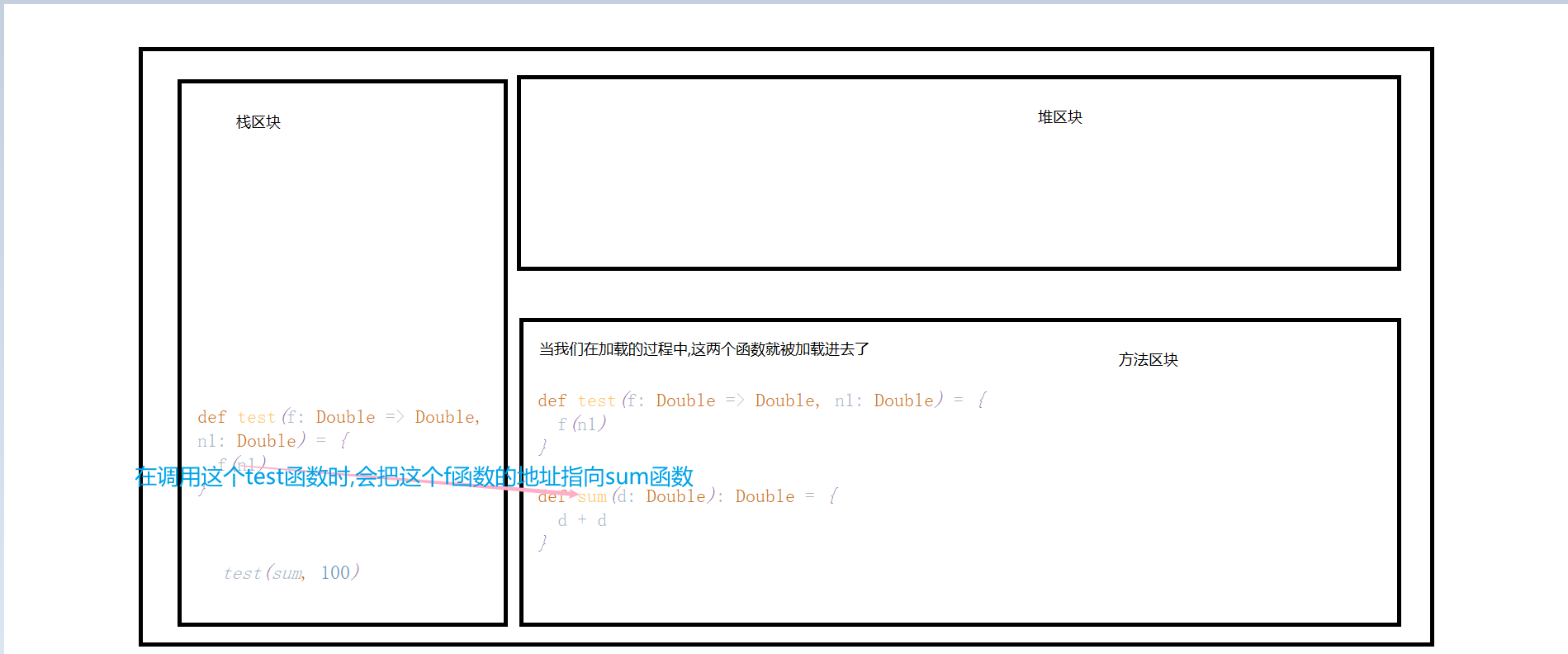
高阶函数底层调用原理
在jvm有三个核心的底层区块 (栈、堆、方法区块)
1
2
3
4
5
6
7
| def test(f: Double => Double, n1: Double) = {
f(n1)
}
def sum(d: Double): Double = {
d + d
}
|
- 当我们区调用
test(sum, 100)这个函数的时候,会在栈区开辟一个空间,我们也会进入到test函数中去,另开辟一个空间,当我们调用test(sum, 100)的时候就相当于会把f函数的地址指向给test(sum, 100)这个函数,所以在执行f函数的时候就相当于调用sum这个函数
高阶函数进阶
嵌套多个函数
1
2
3
4
5
6
7
8
9
10
11
12
13
14
15
16
17
18
19
20
| package com.sky.scala.exercise17
object HigherOrderFunction {
def main(args: Array[String]): Unit = {
def test(f1: Double => Double, d: Double): Double = {
f1(mod(d))
}
def sum(d: Double): Double = {
d + d
}
def mod(d2: Double): Double = {
d2 % 2
}
println(test(sum, 100))
}
}
|
高阶函数返回函数类型
示例代码
1
2
3
4
5
6
7
8
9
10
11
12
13
14
15
16
17
18
| package com.sky.scala.exercise17
object HigherOrderFunction2 {
def main(args: Array[String]): Unit = {
def minus(n: Int) = {
(y: Int) => n - y
}
val f1 = minus(10)
println(f1(20))
println(minus(10)(30))
}
}
|


